
Bernina Express Holidays

T he Bernina Express is one of the most famous scenic rail journeys in Europe. Travelling through the Swiss Alps and crossing into northern Italy, the route connects the alpine landscapes of Graubünden with the palm-lined lakes of Italy in around four hours. Running on the UNESCO-listed Rhaetian Railway, the Bernina Express passes glaciers, mountain passes, lakes and historic villages while crossing 196 bridges and viaducts and travelling through 55 tunnels. The railway climbs to 2,253 metres (7,391 ft) above sea level at Ospizio Bernina, making it the highest railway crossing of the Alps without a rack-and-pinion system. The journey forms part of the Rhaetian Railway in the Albula / Bernina Landscapes, recognised for its remarkable engineering and historic railway design.

The Bernina Express Route

The full Bernina Express route runs 144 km (90 miles) between Chur or St Moritz and Tirano.

Along the way, the train climbs through the Albula Valley, across the high Bernina Pass and descends into the Poschiavo Valley before reaching Italy. The landscapes change dramatically throughout the journey – from alpine forests and glaciers to vineyards and Mediterranean vegetation.

Key route facts:

  • Journey length: 144 km (90 miles)
  • Journey time: approximately 4 hours
  • Tunnels: 55
  • Bridges and viaducts: 196
  • Highest point: 2,253 m at Ospizio Bernina
  • Status: UNESCO World Heritage railway

From Tirano, the journey can be extended between February and November by road on the Bernina Express Bus to Lugano, linking the Alps with the lakes of southern Switzerland.


Recommended Itineraries

Bernina Express

On board the Bernina Express

Bernina Express

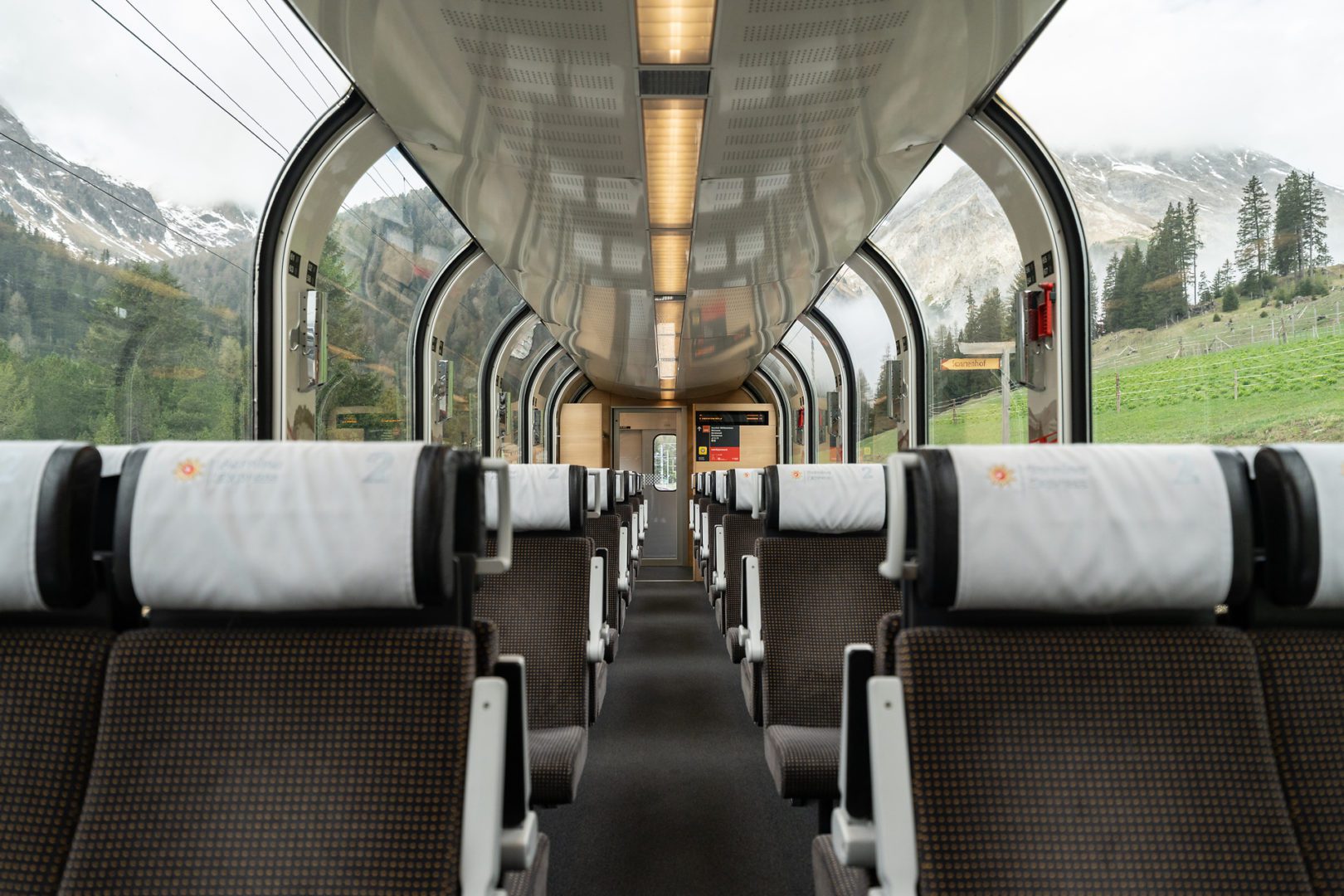
The Bernina Express is designed for sightseeing, with large panoramic windows that allow uninterrupted views of the surrounding Alps.

Passengers can choose between first class and second class accommodation, both offering comfortable seating and wide windows. First class provides more space and a quieter seating layout.

Facilities typically include:

  • Panoramic carriages for scenic viewing
  • Air-conditioned coaches
  • Onboard commentary available via a mobile audio guide
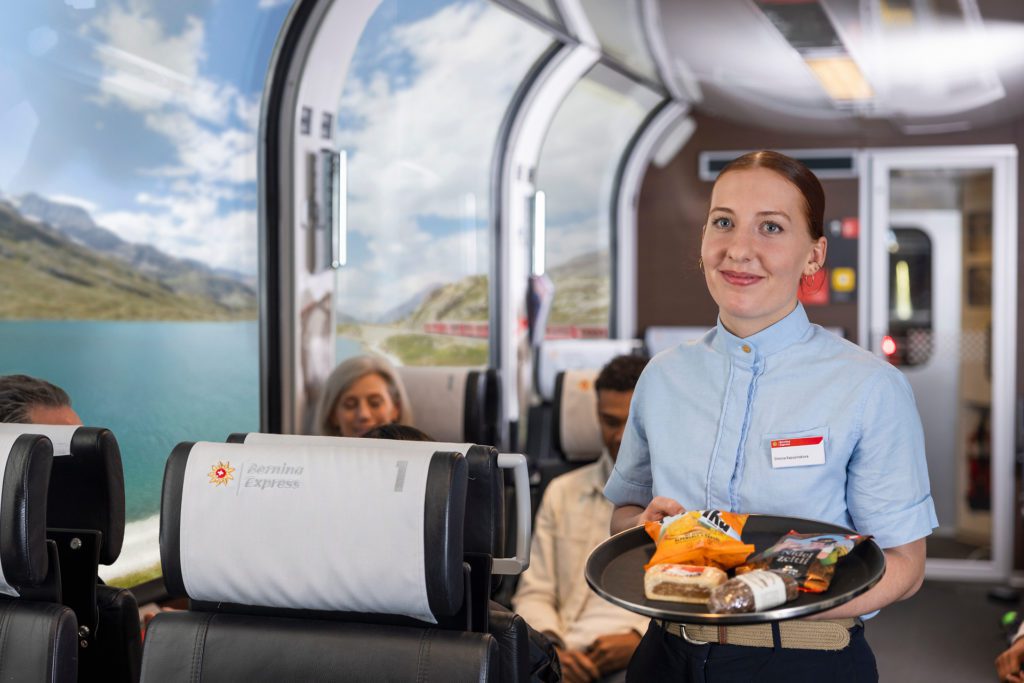
  • Trolley service with drinks and light snacks
  • Toilets, including accessible facilities in first class
  • Free onboard Wi-Fi

There is no restaurant car, but refreshments such as soft drinks, wine, beer and Swiss snacks are available from the onboard trolley service. Passengers may also bring their own food.

In summer months, some trains operate open scenic carriages, allowing travellers to enjoy unobstructed mountain views.

First Class on the Bernina Express

First Class on the Bernina Express

Highlights Along the Bernina Express Route

Bernina Express

Several iconic landmarks and landscapes make the Bernina Express one of the most scenic rail journeys in the world.

St Moritz

A renowned Alpine resort and winter sports destination, St Moritz is one of the starting or finishing points for Bernina Express services. Situated beside a high-altitude lake, it has hosted the Winter Olympics twice and is a popular base for exploring the Engadine region.

Landwasser Viaduct

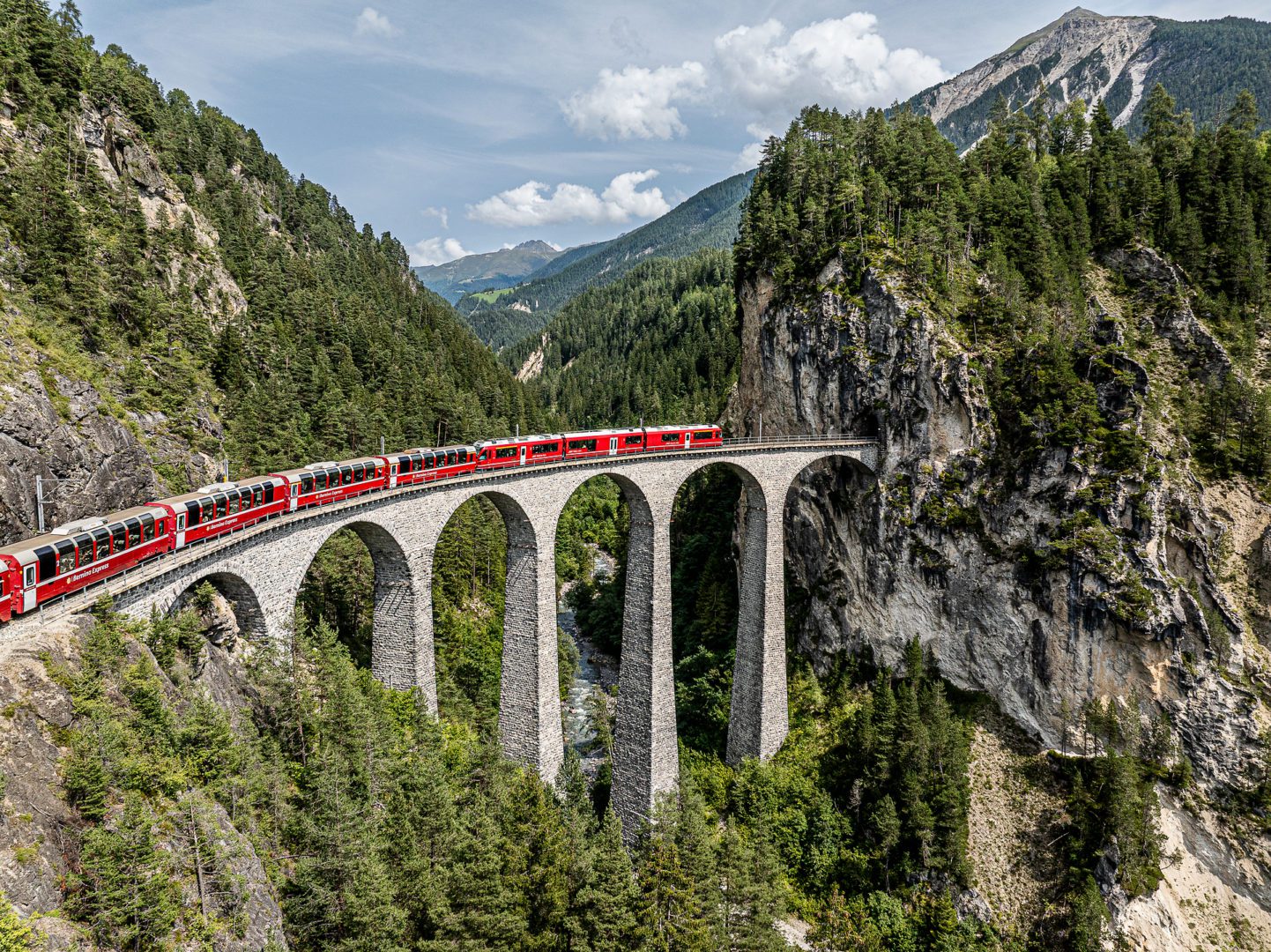
One of the most recognisable features of the Rhaetian Railway, this dramatic six-arched limestone bridge rises 65 metres above a gorge before disappearing directly into a tunnel carved into the cliff face.

Morteratsch Glacier

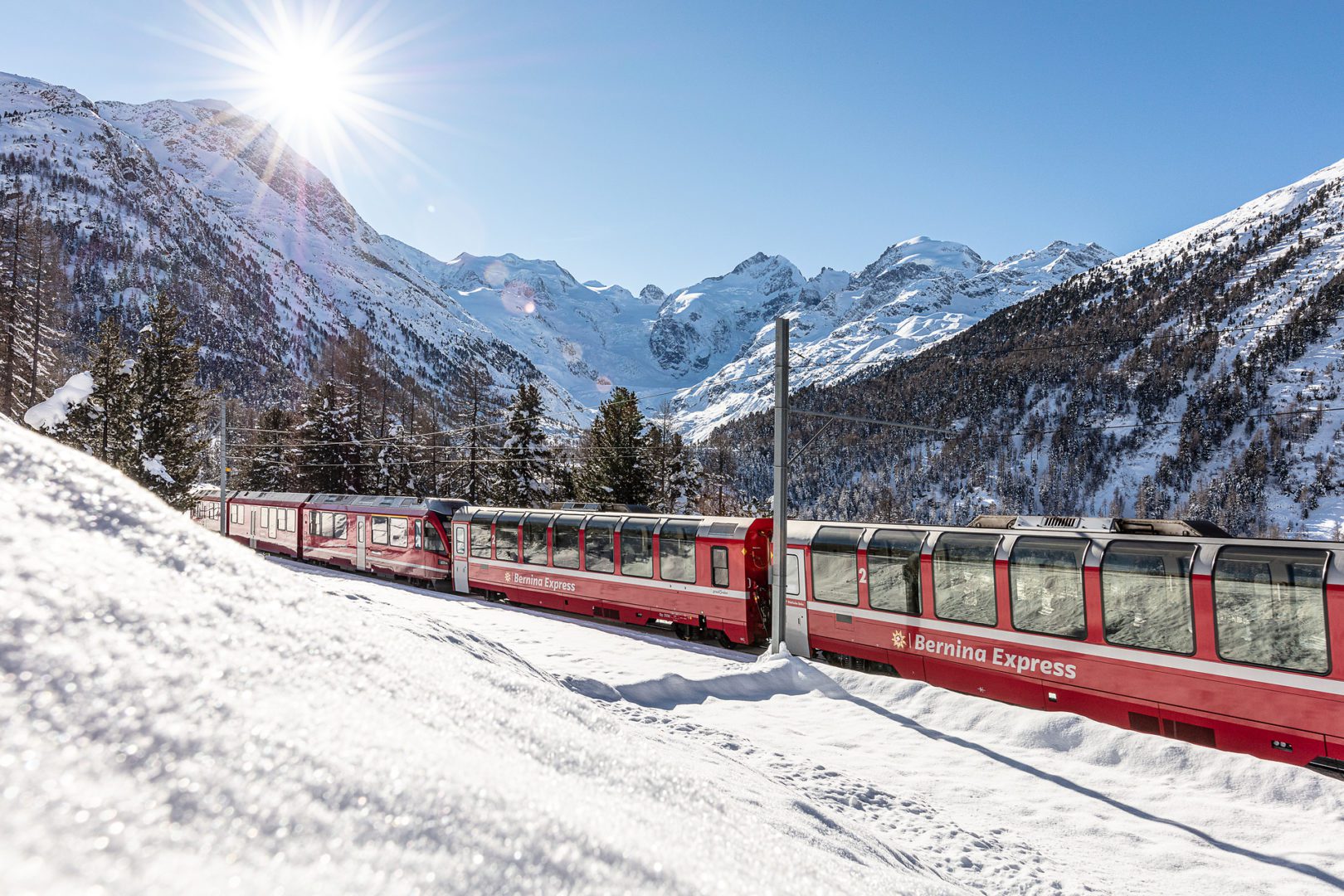
As the train climbs towards the Bernina Pass, passengers can see one of the largest glaciers in the eastern Alps stretching down from the surrounding peaks.

Bernina Pass

The highest section of the journey, where the railway reaches its summit at Ospizio Bernina. At this altitude the landscape becomes stark and dramatic, with glacial lakes and snowfields dominating the scenery. 

Lago Bianco

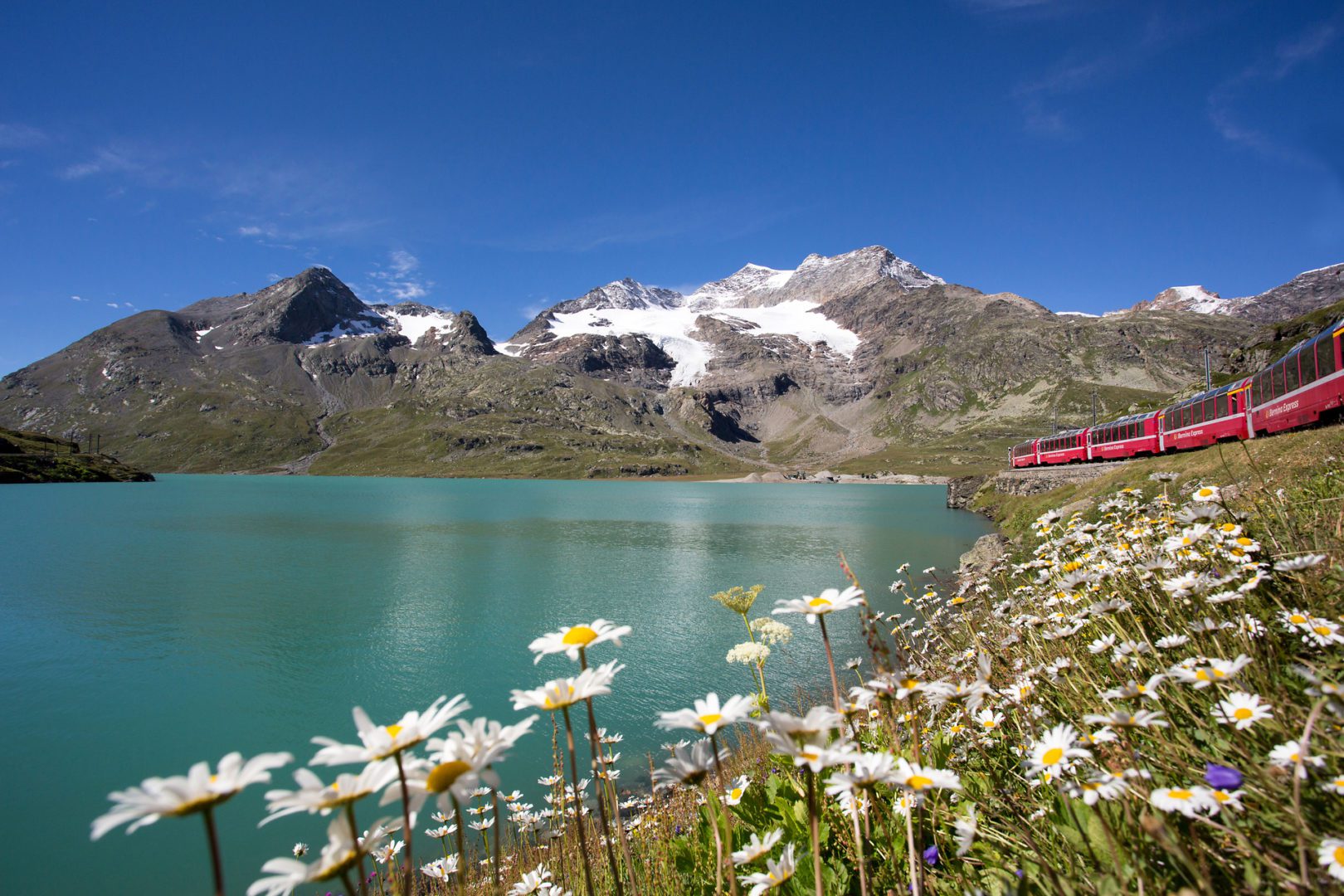
This pale-coloured lake sits beside the railway near the summit. Its distinctive milky appearance comes from glacial sediment carried by meltwater.

Alp Grüm

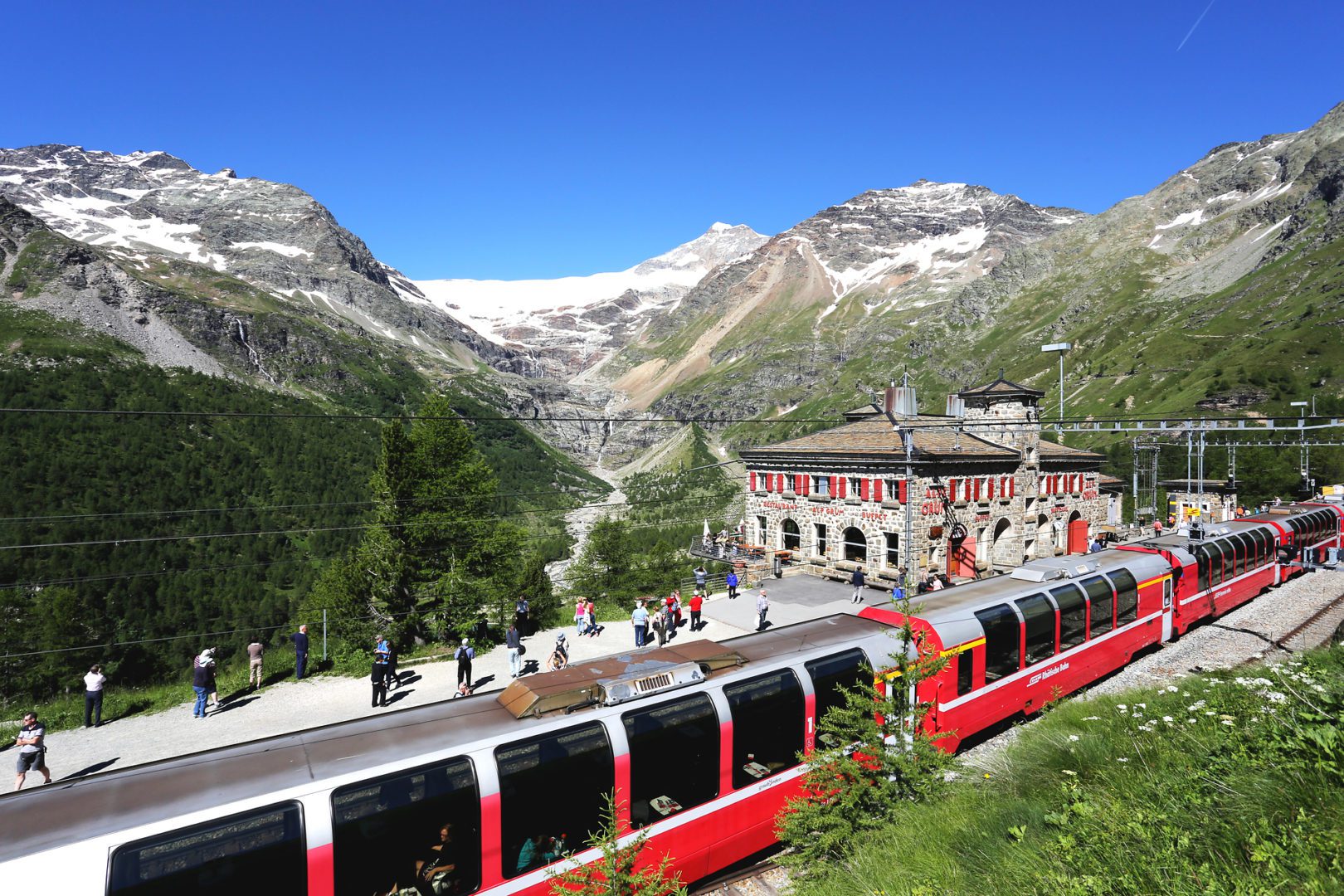
At 2,091 metres above sea level, this mountain station, complete with hotel and restaurant, offers spectacular views over the Palü Glacier and the Poschiavo Valley. 

Brusio Spiral Viaduct

A remarkable engineering feature where the train loops in a full circle across a nine-arched stone viaduct to gain height on a steep gradient.

Lake Poschiavo

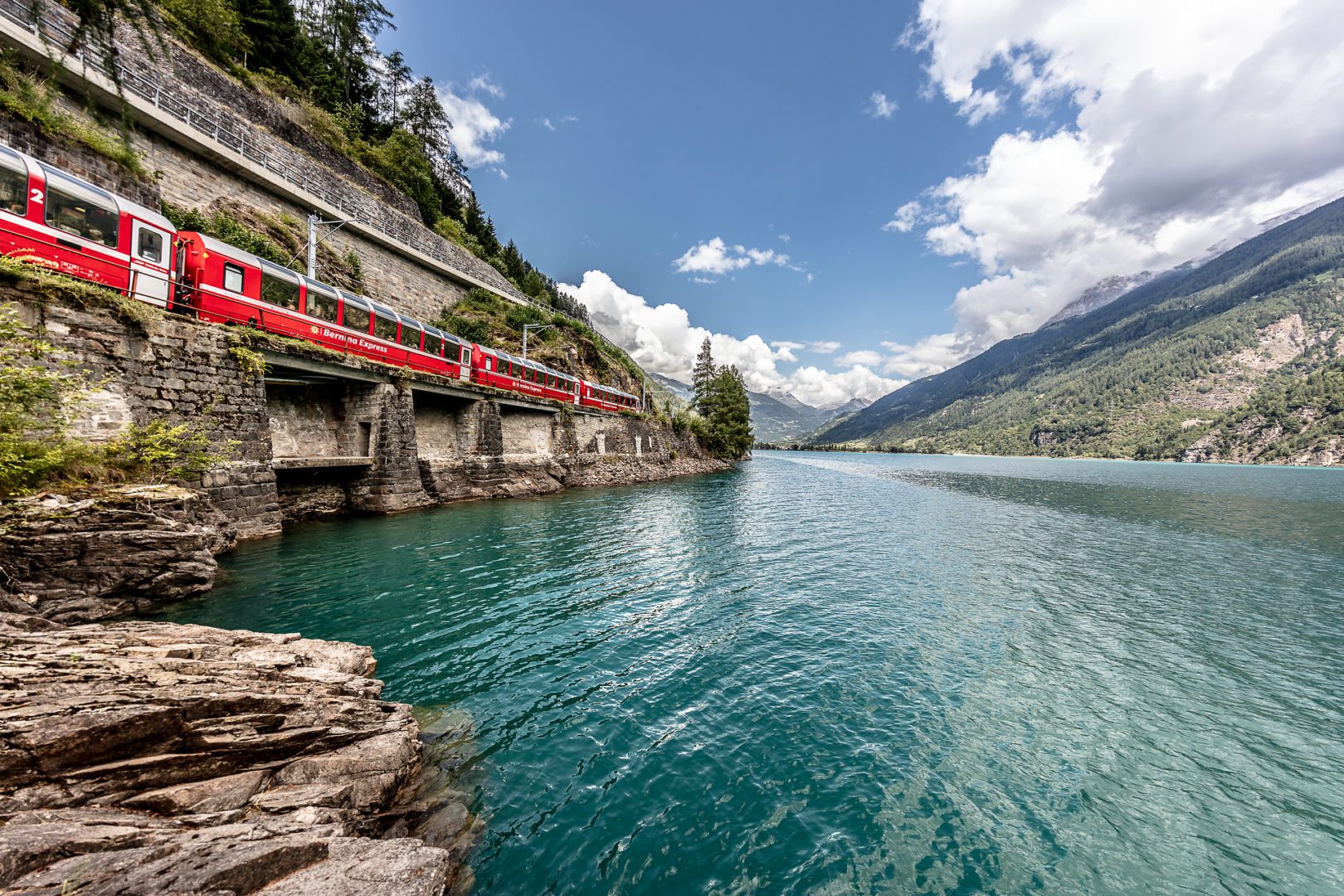
The route then follows the shores of this deep blue lake as the scenery gradually changes from alpine landscapes to the Italian-influenced Poschiavo Valley.

Bernina Express Bus to Lugano

Between February and November, the Bernina Express journey can be extended beyond Tirano with the Bernina Express Bus, which travels through the Italian Alps to Lugano in the Italian-speaking region of Ticino, Switzerland. The scenic road journey takes around three hours and passes lakes, mountain villages and Mediterranean landscapes, providing a convenient connection between the railway and the Swiss lake region.

The Bernina Express Bus

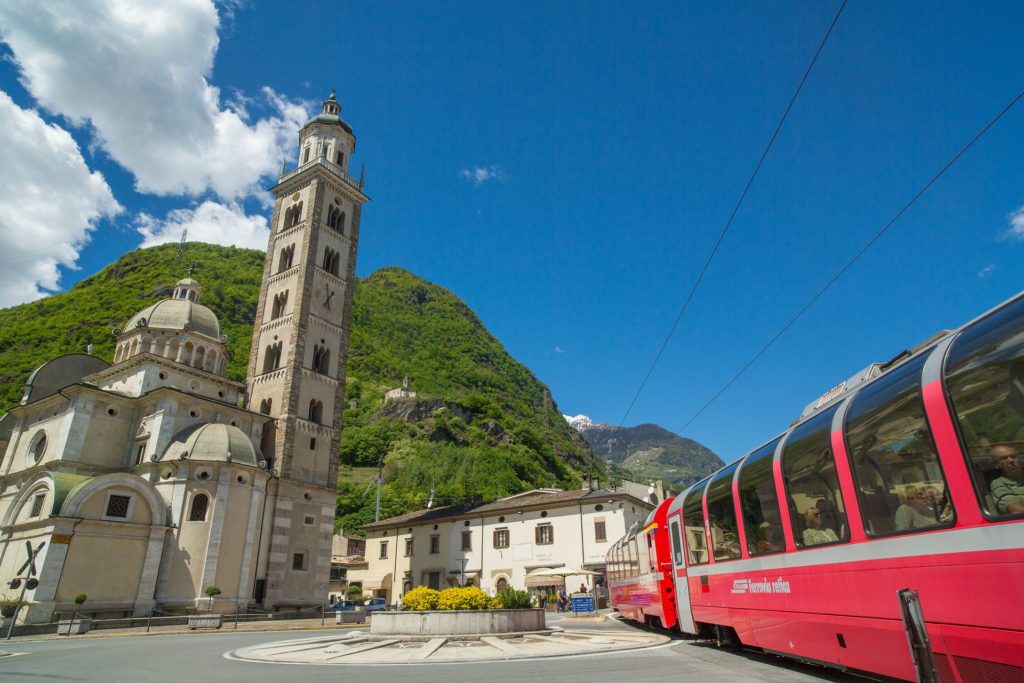
The Bernina Express bus in Tirano

A Historic Alpine Railway

The Bernina Express runs across two historic railway lines:

  • Albula Railway – constructed between 1898 and 1904
  • Bernina Railway – completed in 1910

Together these lines form the UNESCO-protected Rhaetian Railway Albula/Bernina route, recognised as one of the world’s greatest feats of mountain railway engineering.

The line was designed to overcome extremely steep Alpine terrain using tunnels, viaducts and spiral loops rather than rack-and-pinion sections, allowing standard adhesion trains to cross the Alps at high altitude.